Temperature is one of the most common measurements people encounter in everyday life. Weather forecasts, cooking instructions, travel information, science lessons, medical information, and household activities often use temperature values. The two scales most frequently seen in everyday situations are Celsius and Fahrenheit. Since different countries and sources may use different scales, knowing how to convert between them can be useful.
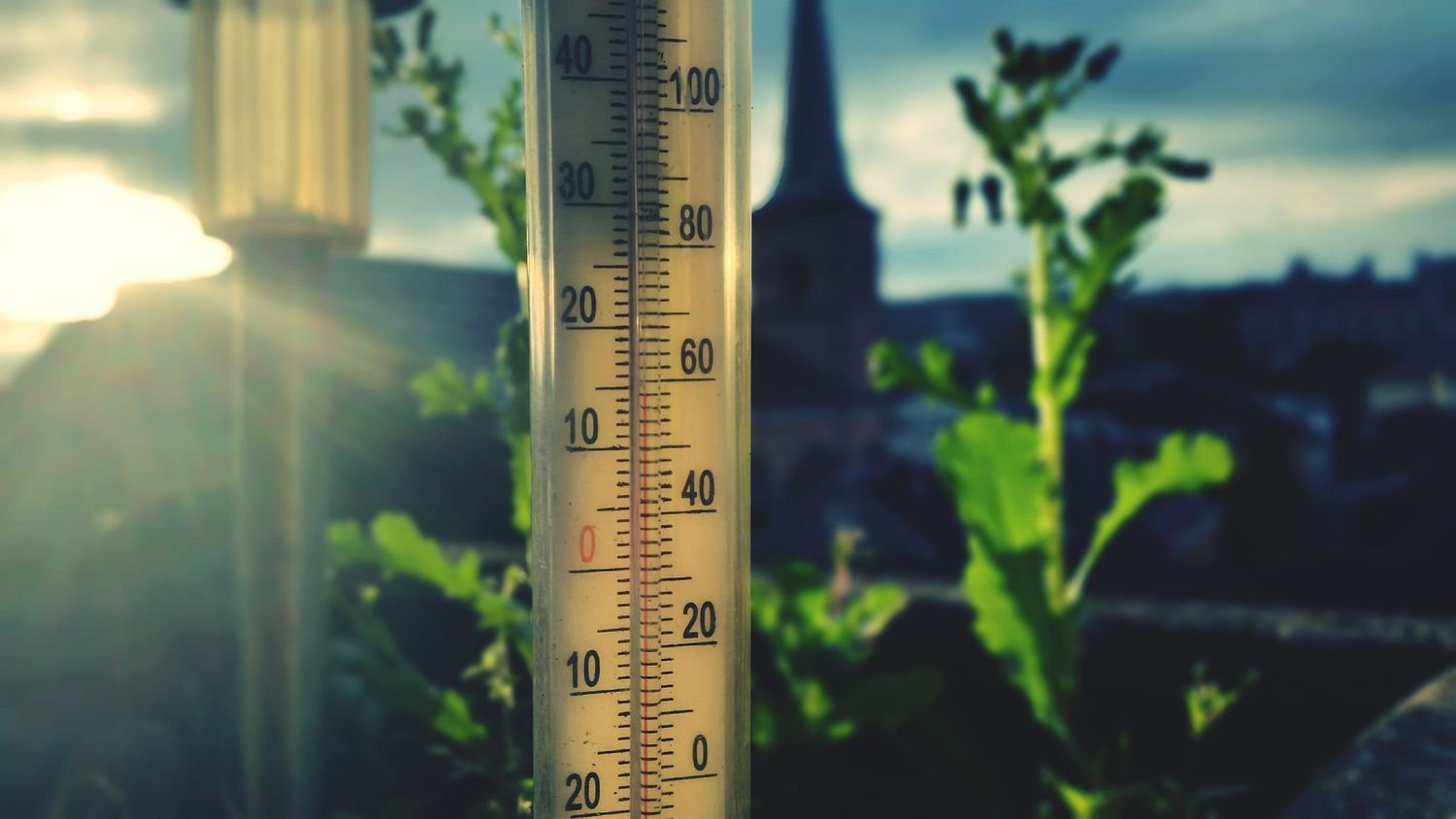
Celsius is widely used around the world, while Fahrenheit remains common in the United States and a few other places. The two scales measure the same physical quantity, but they use different numerical systems. This means that the same temperature can have two different numerical values depending on the scale being used. Understanding the relationship between these scales makes temperature information easier to compare and understand.
Understanding the Celsius Scale
The Celsius scale is one of the most commonly used temperature scales in the world. It is based on the properties of water and is widely used in weather reports, household measurements, education, and scientific applications. On the Celsius scale, water freezes at 0 degrees and boils at 100 degrees under standard atmospheric conditions. These reference points make the scale relatively easy to understand.
Every degree represents the same size of temperature change within the Celsius scale. A change of ten degrees Celsius represents the same physical temperature difference as a change of ten degrees on the Celsius scale regardless of where the measurement begins. This consistent spacing makes Celsius useful for everyday temperature measurements and calculations.
Understanding the Fahrenheit Scale
The Fahrenheit scale uses a different numerical arrangement. Water freezes at 32 degrees Fahrenheit and boils at 212 degrees Fahrenheit under standard atmospheric conditions. This means there are 180 Fahrenheit degrees between the freezing and boiling points of water, compared with 100 Celsius degrees between the same reference points.
Because the degree sizes are different, one degree Celsius does not represent the same temperature change as one degree Fahrenheit. This difference is one of the main reasons a direct numerical comparison between the two scales can be misleading. A conversion formula is needed to accurately change a temperature from one scale to the other.
Why Celsius and Fahrenheit Have Different Numbers
The different numerical values do not mean that the scales measure different things. Both scales measure temperature. The difference comes from how each scale was designed and where its reference points were placed. Celsius uses 0 degrees and 100 degrees as important reference points for the freezing and boiling of water under standard conditions. Fahrenheit uses 32 degrees and 212 degrees for the same reference points.
Because the distance between these reference points is different, a mathematical relationship is required when converting between the scales. Once that relationship is understood, the conversion process becomes straightforward.
The Celsius to Fahrenheit Formula
To convert a temperature from Celsius to Fahrenheit, multiply the Celsius value by nine-fifths and then add 32. The formula can be represented as follows
Fahrenheit = Celsius × 9/5 + 32
For example, suppose the temperature is 20 degrees Celsius. First, multiply 20 by nine-fifths. The result is 36. Then add 32. The converted temperature is 68 degrees Fahrenheit.
This means that a temperature of 20 degrees Celsius is equivalent to 68 degrees Fahrenheit. The calculation demonstrates why the Fahrenheit number is usually larger than the Celsius number at ordinary positive temperatures.
The Fahrenheit to Celsius Formula
Converting Fahrenheit into Celsius requires reversing the relationship. First, subtract 32 from the Fahrenheit value. Then multiply the result by five ninths. The formula can be represented as follows.
Celsius = (Fahrenheit − 32) × 5/9
For example, suppose the temperature is 86 degrees Fahrenheit. First, subtract 32 from 86, giving 54. Then multiply 54 by five ninths. The result is 30 degrees Celsius.
Therefore, 86 degrees Fahrenheit is equivalent to 30 degrees Celsius. Following the steps in the correct order is important because the subtraction of 32 must happen before the multiplication.
Why the Number 32 Appears in the Formula
The number 32 appears because water freezes at 32 degrees Fahrenheit while it freezes at 0 degrees Celsius under standard atmospheric conditions. When converting Fahrenheit to Celsius, subtracting 32 adjusts the Fahrenheit scale so that its freezing point aligns with the Celsius scale.
Similarly, when converting Celsius to Fahrenheit, adding 32 accounts for the difference between the freezing points of the two scales. This is why temperature conversion cannot be handled simply by multiplying or dividing by a fixed number.
Why the Fractions 9/5 and 5/9 Are Used
The fractions nine fifths and five ninths come from the different spacing between the freezing and boiling points of water on the two scales. Celsius has 100 degrees between these points, while Fahrenheit has 180 degrees.
The relationship between the scale intervals is therefore 180 divided by 100, which simplifies to nine-fifths. When converting in the opposite direction, the relationship is reversed to five ninths. Understanding this connection makes the formulas easier to remember rather than treating them as unrelated numbers.
A Simple Way to Remember the Conversion
One useful way to remember the formulas is to focus on the direction of the conversion. When going from Celsius to Fahrenheit, multiply by nine-fifths and add 32. When going from Fahrenheit to Celsius, subtract 32 first and then multiply by five ninths.
Remembering the order is especially important. In the Fahrenheit to Celsius conversion, subtracting 32 comes before multiplying. Using the wrong order can produce an incorrect result even if the correct numbers are used.
Common Celsius Temperatures in Fahrenheit
Knowing a few familiar temperature points can make everyday conversions easier. Zero degrees Celsius equals 32 degrees Fahrenheit, which represents the freezing point of water under standard conditions. Ten degrees Celsius equals 50 degrees Fahrenheit. Twenty degrees Celsius equals 68 degrees Fahrenheit, while 30 degrees Celsius equals 86 degrees Fahrenheit. Forty degrees Celsius equals 104 degrees Fahrenheit.
These examples provide useful reference points when reading weather information. If a temperature falls between familiar values, you can often estimate the Fahrenheit equivalent before performing an exact calculation.
Common Fahrenheit Temperatures in Celsius
The same approach works in the opposite direction. Thirty-two degrees Fahrenheit equals 0 degrees Celsius. Fifty degrees Fahrenheit equals 10 degrees Celsius. Sixty-eight degrees Fahrenheit equals 20 degrees Celsius, and 86 degrees Fahrenheit equals 30 degrees Celsius. One hundred four degrees Fahrenheit equals 40 degrees Celsius.
Learning these common values can help you recognize temperatures quickly without calculating every time. This can be particularly useful when traveling between countries that use different temperature scales.
Converting Negative Temperatures
Temperature conversion also works for values below zero. However, negative numbers require careful attention during the calculation. For example, converting negative ten degrees Celsius into Fahrenheit involves multiplying negative ten by nine-fifths and then adding 32. The result is 14 degrees Fahrenheit.
When converting a negative Fahrenheit temperature into Celsius, remember to subtract 32 from the Fahrenheit value before multiplying by five ninths. Writing each step clearly can reduce mistakes when working with negative values.
Converting Temperatures for Weather Information
Weather forecasts are one of the most common reasons people need temperature conversion. A traveler may see a forecast in Fahrenheit while being more familiar with Celsius, or the opposite may happen when reading international weather information. Knowing the conversion formulas allows you to understand the temperature without relying entirely on a separate calculator.
For quick estimates, familiar reference points can also help. For example, 20 degrees Celsius is 68 degrees Fahrenheit, so a temperature slightly above 20 degrees Celsius will be somewhat above 68 degrees Fahrenheit. Exact calculations should still be used when precision matters.
Temperature Conversion in Cooking
Cooking is another situation where temperature conversion can be useful. Oven temperatures may be listed using different scales depending on the source of a recipe. If a recipe gives a temperature in Fahrenheit and your oven uses Celsius, converting the value correctly becomes important.
Cooking temperatures are often rounded to practical values, so it is useful to check the original recipe and understand whether the stated temperature is intended to be exact or approximate. For recipes that depend heavily on temperature, using a reliable conversion reference can help avoid errors.
Temperature Conversion in Science
Temperature conversion is also important in education and scientific work. Students may encounter both Celsius and Fahrenheit when studying temperature and measurement. Scientific applications may use Celsius along with other temperature scales depending on the subject.
When accuracy is important, calculations should be performed carefully rather than relying on rough mental estimates. Keeping the original value, formula, and converted result visible makes it easier to review the calculation and identify mistakes.
Use a Calculator for Faster Results
A calculator can make temperature conversion faster, especially when working with decimal values or multiple measurements. Enter the formula carefully and check that the correct scale is selected. Online conversion tools can also provide instant results, but understanding the underlying formula remains useful because it allows you to verify whether the answer looks reasonable.
Technology can reduce the effort required for calculations, but basic knowledge is still valuable. If a calculator produces an unexpected result, understanding the conversion process gives you a way to check whether the input or formula was entered incorrectly.
Check Your Result With a Rough Estimate
After completing a conversion, take a moment to consider whether the answer makes sense. For example, a temperature of 20 degrees Celsius should convert to a value around the upper sixties Fahrenheit. If your result is several hundred degrees, there is probably an error in the calculation.
This simple habit can catch mistakes before they cause problems. Estimation does not replace an exact calculation, but it provides a useful second check.
Avoid Mixing the Two Scales
A common mistake is accidentally using a Celsius value as though it were Fahrenheit or vice versa. Always identify the original unit before starting the calculation. When writing measurements, include the unit with the number rather than relying only on the numerical value.
For example, 25 degrees Celsius and 25 degrees Fahrenheit represent very different temperatures. The number alone is not enough to understand the measurement. Keeping the unit visible throughout the process helps prevent this type of confusion.
When Exact Conversion Is Important
For casual weather discussions, rounded temperature values may be sufficient. However, greater accuracy may be necessary for scientific experiments, technical work, cooking processes, industrial applications, or other situations where temperature affects the result.
In such cases, avoid unnecessary rounding during the calculation. Keep the decimal values until the final answer and round only according to the required level of precision. This produces a more accurate result and makes the calculation easier to verify.
Understanding Celsius and Fahrenheit conversion becomes much easier once the relationship between the two scales is clear. Celsius and Fahrenheit measure the same physical quantity, but they use different reference points and different degree intervals. This is why converting between them requires both a multiplication or division step and an adjustment.
The most important formulas to remember are simple. To convert Celsius to Fahrenheit, multiply by nine-fifths and add 32. To convert Fahrenheit to Celsius, subtract 32 and multiply by five ninths. With these formulas, familiar reference temperatures, and a quick check of the final result, you can handle most everyday temperature conversions confidently.
Whether you are checking the weather, following a recipe, studying measurement, or comparing information from different countries, understanding temperature conversion can save time and prevent confusion. A little practice is usually enough to make the process quick, accurate, and easy to remember.